Wednesday, August 30, 2006
Apl. De. Ap.'s BEBOT
Apl. De. Ap.’s song “Bebot” from the 2005 Black Eyed Peas album Monkey Business sparked controversy for this two music videos. Pat Ginelsa, the director of “The Apl Song” and the award winning film “The Debut”, directed and shot Bebot “Generation One” and “Generation Two”.
The first of these two music videos, “Generation One”, pays tribute to the history of the Filipino American male worker. Set in Stockton, which is often noted as an important site for Filipino “bachelor communities”, the music video follows Apl as a agricultural laborer leaving the fields after a lone day and then going to a Taxi Dancehall. It is in this space that the bulk of the video takes place.
Personally, I like this video a lot more on several levels. First, I feel like the video is far more aesthetically pleasing and more in line with Pat Ginelsa’s work. Secondly, I really enjoy the way that Apl. De. Ap., Pat Ginelsa, and the rest of the Black Eyed Peas (though their roles in this music video are to be like Fergie in every video) offer an alternative history lesson using their popularity. Finally, I like this video more because it’s not filled with fleshy gyrating female bodies, but shows both men and women dancing in pleasure. Also, I like their red lipstick!
I feel like “Generation One” of the “Bebot” music videos also stays more true to way that the Black Eyed Peas reached high commercial success. Well, it stays more true to their roots. I guess “Generation Two” can be summed up as the entry of Fergilicious. Apl. De. Ap. and Will. I. Am. (in both their oldly named glory) started a B-Boy dance crew called Tribal Nation in the 90’s. They performed around Southern California. DJ Icey Ice, when he came to talk about Filipin@s in Hip Hop, talked about how the early stages of the Black Eyed Peas would perform at his parties. I feel like “Generation One” is more authentic.
On the other hand, “Generation Two” is the pop culture new and less true performative version. I feel like even though it is the exact same song playing, the music video destroys the vibe of the song and distorts it into another music video that I could pass on. I have several issues with this music video. The role of Apl’s mother, or maybe even the “thick accented Aunt”, plays on a stereotype of the Filipina American, which is often also documented in Pilipino Culture Nights. Secondly, the video revolves around the performing female body. It’s difficult to believe that the music video is not “objectifying women” as the notes before the video state. Finally, I just don’t like the bright colors as much. I feel like they are distracting and borderline irritating.
I’m not making the stance that music videos cannot be contemporary, but rather that “Generation Two” leaves me feeling a bit disappointed. I wonder whether progressive artists that I know, who work the activist networks, would be just as willing to sacrifice the integrity of their history to make a video that would receive more airtime. Whether their popularity must come at the expense of women?
Apl.de.ap still does great work for the Filipin@ and Filipin@ American community. He started the Apl Foundation, which gives back to communities and children within the Philippines and throughout Asia. He also started his own music company called Jeepney Music, Inc., handling DJs such as Free School, DJ Rockyrock, DJ MIA, and PoetNameLife.
-GY

Saturday, August 23, 2003
Dual Citizenship – Reclaiming the Filipino identity
Citizenship Retention and Re-acquisition Act of 2003
 On August 29, 2003, the government of the Philippines passed Republic Act No. 9225 also known as the Citizenship Retention and Re-acquisition Act of 2003. This law allows natural-born Filipinos the opportunity to retain or re-aquire their Filipino citizenship in addition to the citizenship of their resident country. Essentially, dual citizenship already existed due to operation of nationality laws. For instance, a child born in the United States to Filipino parents is considered an American citizen according to jus soli, place of birth, and a Philippine citizen by jus sanguinis, citizenship of parents. However, citizenship in the past has been lost due to naturalization in another country.
After the passage of R.A. 9225, citizenship is no longer lost upon naturalization as the natural-born Filipino retain citizenship. In addition, natural-born Filipinos can re-acquire their lost citizenship through an application process. Residency is not a requirement for application as there are methods of applying while overseas in addition to within the Philippines.
Implications for Filipino-Americans
If a Filipino-American qualifies as a natural-born Filipino, they can apply to dual citizenship and regain full civil, economic, and political rights under existing laws of the Philippines. This includes but is not limited to the right to own property in the Philippines, right to acquire a Philippine passport, and right to vote in elections. Other citizenship duties such as income tax are only applied to income earned from the Philippines. A professional can also apply for licenses or permits to engage in their legal practice.
By having dual citizenship, Filipino-Americans are gaining a number of advantages. For instance, some Filipino-Americans wish to stay in the Philippines for extended periods of time. However, extending tourist visas can become extremely expensive and restrict the period of time a person can stay in the Philippines. By becoming a citizen, a person can automatically be allowed to stay for a year. This act also allows many to retire to the Philippines after spending a majority of their adult life in the United States. There are limitations of how much land a foreigner can purchase or invest in and citizenship removes these. There are also those that wish to become “Filipino” again and this allows them to do so. In a sense, it allows them to finally return home.
Requirements for applying for retention or re-acquisition of Filipino citizenship
As according to the Commission on Filipinos Overseas
 Duly completed verified petition
Notarized Oath of Allegiance
Two (2) recent 2”x2” colored photographs of applicant
Application Fee (US$50 for overseas applicants or PhP 2,500 for Philippine based applicants)
Proof as natural born Filipino citizen, an original or photocopy of at least one of the following:
photocopy of foreign passport
photocopy of certificate of naturalization or an original affidavit stating how foreign citizenship was acquired
two self-addressed and stamped legal size envelopes
Summary of process


Sites to visit
www.ecensus.com.ph - Birth certificates can be requested through the NSO website
www.immigration.gov.ph - R.A. 9226 Form No. 1 can be downloaded from here
www.dfa.gov.ph - contact information and addresses for Philippine Embassies and Consulates where applications can be filed
On August 29, 2003, the government of the Philippines passed Republic Act No. 9225 also known as the Citizenship Retention and Re-acquisition Act of 2003. This law allows natural-born Filipinos the opportunity to retain or re-aquire their Filipino citizenship in addition to the citizenship of their resident country. Essentially, dual citizenship already existed due to operation of nationality laws. For instance, a child born in the United States to Filipino parents is considered an American citizen according to jus soli, place of birth, and a Philippine citizen by jus sanguinis, citizenship of parents. However, citizenship in the past has been lost due to naturalization in another country. After the passage of R.A. 9225, citizenship is no longer lost upon naturalization as the natural-born Filipino retain citizenship. In addition, natural-born Filipinos can re-acquire their lost citizenship through an application process. Residency is not a requirement for application as there are methods of applying while overseas in addition to within the Philippines.
Implications for Filipino-Americans
If a Filipino-American qualifies as a natural-born Filipino, they can apply to dual citizenship and regain full civil, economic, and political rights under existing laws of the Philippines. This includes but is not limited to the right to own property in the Philippines, right to acquire a Philippine passport, and right to vote in elections. Other citizenship duties such as income tax are only applied to income earned from the Philippines. A professional can also apply for licenses or permits to engage in their legal practice.
By having dual citizenship, Filipino-Americans are gaining a number of advantages. For instance, some Filipino-Americans wish to stay in the Philippines for extended periods of time. However, extending tourist visas can become extremely expensive and restrict the period of time a person can stay in the Philippines. By becoming a citizen, a person can automatically be allowed to stay for a year. This act also allows many to retire to the Philippines after spending a majority of their adult life in the United States. There are limitations of how much land a foreigner can purchase or invest in and citizenship removes these. There are also those that wish to become “Filipino” again and this allows them to do so. In a sense, it allows them to finally return home.
Requirements for applying for retention or re-acquisition of Filipino citizenship
As according to the Commission on Filipinos Overseas
Duly completed verified petitionNotarized Oath of AllegianceTwo (2) recent 2”x2” colored photographs of applicantApplication Fee (US$50 for overseas applicants or PhP 2,500 for Philippine based applicants)Proof as natural born Filipino citizen, an original or photocopy of at least one of the following:photocopy of foreign passportphotocopy of certificate of naturalization or an original affidavit stating how foreign citizenship was acquiredtwo self-addressed and stamped legal size envelopesSummary of process
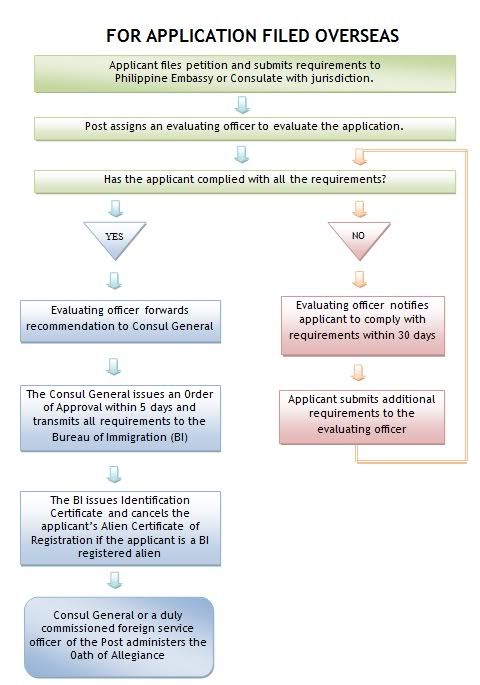
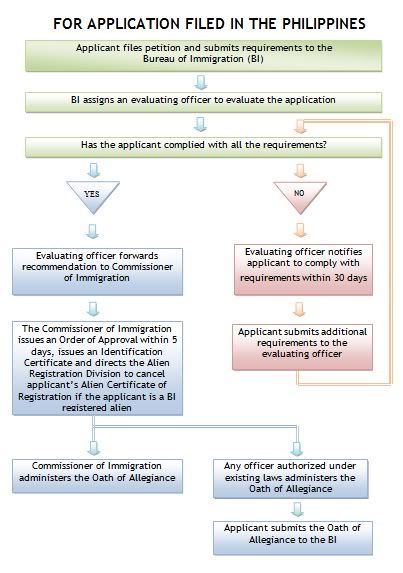
Sites to visit
www.ecensus.com.ph - Birth certificates can be requested through the NSO websitewww.immigration.gov.ph - R.A. 9226 Form No. 1 can be downloaded from herewww.dfa.gov.ph - contact information and addresses for Philippine Embassies and Consulates where applications can be filed
Monday, May 21, 2001
EDSA 3
EDSA 3 was a protest sparked by the arrest in April 2001 of newly deposed Erap. The event still took place in EDSA. 4 months after EDSA 2, the protests were asserted as a more populist and representative uprising compared to the previous demonstrations. The protests and the attack of the presidential palace failed in their objectives. Participants continue to claim that it was a genuine People Power event, a claim disputed by the participants and supporters of Edsa 2. President GMA has acknowledged the diversive nature of the two terminologies by saying in one statement that she hoped to be the president of the Edsa 2 and Edsa 3.

The crowd of an alleged several thousand Filipino people , most of whom were urban poor and devotees of Iglesia in Cristo, gathered at the Edsa Shrine. News organizations aiming to cover the rally were advised to to approach EDSa as there were reports of stones being thrown at cameramen, especially those from ABS-CBN. This protest, however, was led by members of the political opposition of the time: Enrile, Defensor-Santiago, and Sotto III.
The rebellion aimed to remove GMA from presidency and to reinstate Estrada. It was in May 1, 2001, when the rebellion came to a head on the morning of that day. Hundreds of thousands of protesters stormed towards Malacanang Palace. Several broadcast vans of media personnel were attacked by the crowd, the dispersed marchers, causing violence causing the police and military personnel to implement maximum tolerance policy.
Hours after the crowds of Edsa2 were dispersed, representatives of the Archdiocese of Manila and Civil Society supporters of the Arroyo administration reclaimed the Edsa Shrine where there had been alleged acts of vandalism and garbage all over the vicinity. Since the protest was carried out mostly by the lower income, uneducated masses, widespread destruction and vandalism of public utilities and public store fronts along the protest routes at Recto Avenue.

Critics of Edsa 3 argue that while this was major protest, the spirit of it was unlike the first and second protests. Supporters of Edsa 3 journalism allege that Edsa 1 and 2’s participants were made up of the middle and upper classes and thus, not democratically-representative unlike the participants of Edsa 3. Other arguments also point to the success of the first two to remove the presidents targeted, as opposed to the Edsa 3’s failed event.
-CA
Monday, May 14, 2001
EDSA DOS

EDSA DOS, also known as the Edsa Revolution of 2001, is the common name of the four day popular revolution that peacefully overthrew the then President, Joseph “ERAP” Estrada, which took place in January 17-20 2001.
It was in October 2000 when Chavit Singson, Ilocos Sur Governor, went public with accusations that Estrada and his friends and cronies received millions of pesos from operations of the illegal numbers game called jueteng. And this prompted rage from the public.
The next day, Senate Minority Leader Teofisto Guingona Jr. delivered a fiery privilege speech accusing Estrada of receiving P220M in jueteng money from Singson from November 1998-August 2000, besides taking P70M on excise tax on cigarettes for Ilocos Sur. The privilege speech was referred by Senate President Franklin Drilon, to the Blue Ribbon Committee and the Committee on Justice for joint investigation. Another committee in the House of Representatives decided to investigate the expose, while other house members spearheaded a move to impeach the president.

On January 17, 2001, the impeachment trial of President Estrada moved to the investigation of an envelope with an evidence that would prove acts of political corruption by Estrada. Senators allied with Estrada voted to block the evidence and after the vote took place, with not opening the envelope favored, Aquilino Pimentel resigned as Senate President and walked out, followed by the 9 opposition senators.
The walk out and the voting outcome prompted the Philippine National Police and the Armed Forces of the Philippines to withdraw support for Estrada, joining the crowds at the Edsa Shrine 2 days later. At 2 pm that day, Estrada appeared on television the first time stating that he will not resign, rather, he wants the impeachment trial to continue, stressing that only a guilty verdict will prompt him to resign from his office.

Shortly after, Erap called for a snap presidential election to be held with congressional and local election on May 14, 2001. GMA then takes her oath of office in the presence of the crowd at EDSA, becoming the 14th woman president of the Philippines. At 2pm , Erap released a letter saying he had strong and serious doubts of the legality of her presidency, but said he would give up his office to avoid being an obstacle to healing the nation. Later, Erap finally conceded and his family leave Malacanang Palace, and was placed on house arrest.
-CA
Friday, March 16, 2001
The Debut

The Debut (2001) is the first Filipino-American film to be released in theaters nationwide. It serves as an example of contemporary life for second generation Filipinos, with themes pertaining to identity, acculturation, and family. This movie is especially catered to Filipino Americans because of the story line. It is the typical question that all Filipino Americans must answer: with whom do I identify? For most, a lack of exposure may lead to disinterest in one's cultural heritage. Vernacularly speaking, Ben's character would be called “white-washed,” meaning that he has assimilated to America so well that he is devoid of any customs, knowledge, or even curiosity about the Philippines or Filipino life. Ben also criticizes others for having an accent, even though they have lived for years in the United States.
In some ways, it is not Ben's fault. Although there are many Filipinos in America, their influence at the time was weak, in regards to public appearance either in politics or popular culture. The history of the Philippines is also limited in schools. Because the American colonization was a gruesome one, it tends to be skimmed, just listing figures like General MacArthur, who saved the Philippines from the Japanese occupation. It does not delve into the Battle of Manila, the creation of concentration camps, or events such as the World's Fair. This re-education of the Filipinos began shortly after their colonization. There is a common saying that the winners get to write history. In this case, it is partly true because the Filipino school systems were under the control of the Americans. Educators would glaze over the bloody history, and focus on the United States as saviors. So where is one to learn about the Philippine's true history? Unless enrolled in a Filipino/American Experience class, or through personal endeavors, one is forced to seek it from friends and family. For example, parents can tell stories about their past, and friends can collect a group and attend a Pilipino Culture Night. Otherwise, that person is at a loss. A culture should be immersing; if areas lack anything remotely Filipino, interest isn't even generated. The Debut was groundbreaking because it was the first Filipino American film to really gain attention in the United States. It's modern twist helps relate it to the current generation, which in turn helps them identify with it. Old history films sharing, say, information about the World's Fair, seem like so long ago that it hardly seems identifiable. This also goes for current Filipino soap operas who may have less of an impact due to its ridiculous story plots.“It wouldn't be pair.” (In a filipino accent, f's sound like p's.
He's saying “fair.”)
“What?”
“I said it wouldn't be pair to jump in.”
“Man, what does fruit got to do with this? I can't believe I'm related to you. You've been here two years and it still looks like you went through customs yesterday.”
 Because of acculturation, history becomes more diluted with every generation. It's important to reinstate the value of culture, and to target those who will be able to pass it on to their children. This movie is specifically for Filipino-Americans because it tells their story in hopes of reaching out to those torn between the two cultures. It emphasizes the importance of family, culture, and tradition – things Filipinos are proud of. Ben learned that he should never be ashamed of where he comes from. The Debut teaches audiences to celebrate the Filipino American experience, because in the end, it is a part of who they are.
 Plot synopsis:
Ben is a talented high-school senior who dreams of going to an art school after graduation. However, his strict father wants him to become a doctor and accept a scholarship to medical school instead. His demand is fueled by good intentions – as an immigrant coming to America, he only wishes the best for his son, and wants him to have a stable career with a high paying job. He doesn't wish to hear of Ben's dreams, and this conflict of interests leads to many arguments between them. There is also a cultural difference: whereas the rest of the family still adheres to Filipino customs and traditions, Ben has rejected his Philippine heritage. Everything begins to pique as his sister's 18th birthday is arriving, and they are preparing for her debut. A debut is a woman's coming-of-age party, in which she is officially presented to society. There is also a court in which the young men and woman dance. Ben would rather hang out with his Caucasian friends than attend, but he is finally pressured to go. It is at her debut that he finally confronts all his problems. Things begin to change as events unfold and he forced to question himself, the choices he has made, and the way in which he sees the world. He begins talking to his sister's best friend Annabelle, who gives him a listening ear. Unfortunately, her ex-boyfriend appears, and he begins a fight. He calls Ben names like “white boy” and “coconut,” meaning that he is brown on the outside but white on the inside. In the end, the culture clashes make him realize that his Filipino heritage is important, and he resolves things between him and his father.
 Awards
2000 Audience Award for Best Feature Film – Hawaii International Film Festival
International Film Festival 2000 Best Feature Film – San Diego Asian Film Festival
Ben is a talented high-school senior who dreams of going to an art school after graduation. However, his strict father wants him to become a doctor and accept a scholarship to medical school instead. His demand is fueled by good intentions – as an immigrant coming to America, he only wishes the best for his son, and wants him to have a stable career with a high paying job. He doesn't wish to hear of Ben's dreams, and this conflict of interests leads to many arguments between them. There is also a cultural difference: whereas the rest of the family still adheres to Filipino customs and traditions, Ben has rejected his Philippine heritage. Everything begins to pique as his sister's 18th birthday is arriving, and they are preparing for
 her debut. A debut is a woman's coming-of-age party, in which she is officially presented to society. There is also a court in which the young men and woman dance. Ben would rather hang out with his Caucasian friends than attend, but he is finally pressured to go. It is at her debut that he finally confronts all his problems. Things begin to change as events unfold and he forced to question himself, the choices he has made, and the way in which he sees the world. He begins talking to his sister's best friend Annabelle, who gives him a listening ear. Unfortunately, her ex-boyfriend appears, and he begins a fight. He calls Ben names like “white boy” and “coconut,” meaning that he is brown on the outside but white on the inside. In the end, the culture clashes make him realize that his Filipino heritage is important, and he resolves things between him and his father.
 Awards
2000 Audience Award for Best Feature Film – Hawaii International Film Festival
International Film Festival 2000 Best Feature Film – San Diego Asian Film Festival
All pictures: (Photo courtesy of debutfilm.pinoynet.com)
Post by: A.C.B
Tuesday, June 30, 1998
Joseph Estrada
Was it the time? Are the Philippines that susceptible to the glamour of Hollywood and the film industry in the Philippine? Joseph Estrada, the 13th president of the Philippines, seems to share several key notes with the former first lady Imelda Marcos.
On June 30, 1998, Joseph Estrada was sworn in as president of the Philippines. He won with a wide margin of votes in his favor. Joseph Estrada gained popularity, leading to widespread support with his entrance into politics, by first being a famous movie actor. The margin of victory in this free election is the largest in the history of the Philippines.
Joseph Marcelo Ejercito was born on April 19, 1937 in Tondo, the poorest part of Manila. His father, Emilio Ejercito, was a government engineer, setting his family upper middle class. Joseph Estrada attended the Mapua Institute of Technology in hopes of following in his fathers footsteps, but eventually dropped out to become an actor. His family forbad him from using the family name, so he picked up the name Erap Estrada. Joseph Estrada played over one hundred lead roles, usually portraying the tough valiant guy who defended the poor against corrupt establishments.

In 1968, Joseph Estrada entered politics by running for mayor of San Juan. In 1968 he lost his bid for mayor but by 1969, after he won an electoral protest, he became the mayor. As mayor, Joseph Estrada built schools, parks, and a modern police station. While his contributions to building monuments to testify his legacy as the mayor of San Juan, I question whether he was inspired by the Edifice Complex that plagued Imelda Marcos.
In 1975, Joseph Estrada co-founded, with Dr. Guillermo De Vega, the first Metro Manila Film Festival. This was the same festival that is linked to stories of a collapsed building, ghosts, and Imelda Marcos’s decree to continue building.
In 1992, Joseph Estrada meant to run for president, but decided to join Eduardo Cojuangco Jr. and run as the Vice President. Cojuangco Jr. lost the election for presidency, but Joseph Estrada won the vice-presidency. Estrada was appointed head of the Presidential Anti-Crime Commission.
During Joseph Estrada’s run for presidency, the Roman Catholic Church refused the support Joseph Estrada because he had admitted to having fathered four children by women other than his wife. However, Imelda Marcos, then a member of Congress, gave him her support. He also had a devoted following among the country's poor, who often associated his image to the roles that he played.
While I documented the major moments of Estrada’s political achievements, his legacy is littered with corruption and embarrassment. In looking through Joseph Estrada’s biography, political timeline, and major moves, it is difficult to type cast him. Initially, I saw Joseph Estrada sharing many parallels to Imelda Marcos. However, the main distinction is the financial crisis in Asian in 1998. As president, he seemed to have strong understanding of the economy and a better grasp of the needs of the people that Imelda ever did.
In my opinion, the Philippines suffer most from the mental colonization imposed my the United States. Although I am part of the community directly, the vibe of the Philippines that classmates give is that the Philippines is heavily influenced by American pop culture. While there is the beginnings of a rise in nationalist pop culture, for the most part the airwaves and silver screen are dominated by Amerika still. This kind of history of devotion leads people to sway their political leanings with those that they are familiar with-- allowing many different pop culture icons to enter politics.
After thought: In May 2009, Senator Jinggoy Estrada, the son of former Philippine superstar, ex-president and convicted plunderer Joseph Estrada, delivered a speech to the Senate, asking that the management of the Metro Manila Film Festival be given to the Philippine film industry itself.
-GY
Friday, December 2, 1994
Benjamin Cayetano, First Filipino American Governor
On December 2, 1994, Benjamin Cayetano was elected for Governor of Hawaii, and was the first Filipino-American to serve as a state governor in the United States. He left office in 2002, but during his service as governor, he spear-headed a number of sweeping social reforms. He instituted tax cuts, championed school reform, and signed the first legalization of medicinal marijuana in the United States, a topic that is still controversial today, 8 years after the fact. However, perhaps more intriguing than his great accomplishments are his humble beginnings.

Cayetano advocated after school programs, medicinal marijuana, and economic stimulus, but probably not all at once
Cayetano was described as a “latchkey kid” and didn't attend college after graduating high school in 1958. As a young father, he instead worked in a series of menial labor jobs to support his family. Upon being subjected to hiring practices he viewed as racially motivated and politically unfair, Cayetano decided to do something about it. He moved his family to Los Angeles in 1963, where he attended UCLA and eventually earned a law degree in 1971. In 1974 he was elected to the House of Representatives to hold the seat for Honolulu. In 1986 Cayetano became lieutenant governor of Hawaii, and in 1994 he was elected governor.
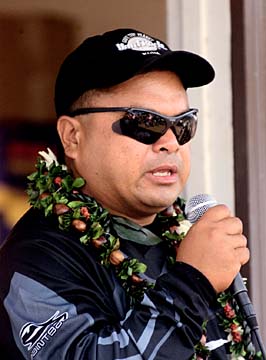
Benjamin Cayetano, delivering a speech, wearing leis

Benjamin Cayetano's climb to power is significant for the Filipino American community. His feat certainly makes holding a government office within reach for any aspiring Filipino American youths. It's not so far fetched to say that even the Office of President is within reach for Filipino Americans. (Especially so now that our current president is a member of a minority.) Cayetano's story makes it clear that it is possible to make a difference in society, even those from a poor background can rise up and take a stand. In fact, the school reform introduced by Cayetano was inspired by the hardships he faced in childhood. State funded after school programs would give students a place to be motivated and feel belonged.
Brandon, the son Benjamin worked to
support after high school, also in lei atire
Notably, Cayetano's beginnings are very relatable to many people both in the Filipino American community and outside. Working hard to support a new family with limited income is a daunting task, yet it is a situation that a lot of people find themselves in. Now, not everybody is going to become the governor of Hawaii, but Cayetano's story shows that there is more to be had and earned beyond working a dead-end job countless hours a week. So while Cayetano made significant headway for Filipino Americans by becoming the United States' first Filipino American governor, perhaps the inspiration he gives stems more from his humble beginnings than his great accomplishments.
Cayetano has written a memoir about his rise to power

-RZ
Subscribe to:
Posts (Atom)