Thursday, March 27, 2008

Jabba-whaaat?


The JabbaWockeeZ are a dance group, known for winning MTV's America's Best Dance Crew: Season One. During their performances, they are known for wearing white masks and gloves, which makes audiences focus on the dancing and the teamwork involved. An important aspect of the masks is that a specific member cannot be targeted because of identical appearances. If one messes up, he can manage to blend in with the rest of the group. (Photo courtesy of hiphopstyler.com)

The group consists of ten members; five are Filipino, including: Rainen Paguio, Chris Gatdula, Phil Tayag. Randy Bernal, and Joe Larot. Although three out of the six performing on ABDC were Filipino, the team is known to be predominantly Filipino, and the name of the group was associated as such. In a sense, the popular show gave Filipinos exposure throughout all of the United States. Media has played a huge part in this, influencing Filipino Americans by exposing talented people of their culture. Although Filipinos are the second largest Asian community in the United States and have been dancing for years, it is interesting to see how much publicity needed to be generated in order to gain the nation's attention. This particular dance crew reached millions of viewers, who turned into millions of fans, wearing shirts proudly displaying their name. The JabbaWockeeZ were special because although they didn't exactly begin a dance movement, their publicity now influences our generation of Filipino Americans who are gaining more respect as dancers – ironic, considering their past.

Historically, Filipinos came to America and had to work low-paying jobs. They experienced a lot of racism, and were stereotyped to be wild and barbaric. A characteristic that helped attribute to this was their affinity for dancing. Beginning in the 1920s until the early 1930s, Filipino men frequented areas called taxi dance-halls. These men came to pay and dance with women as a way to relieve stress and let loose after a hard day's work. These halls were present mostly in the city, where Filipinos migrated for job opportunities. At these popular American institutions, nearly a quarter of its attendees were Filipinos. It was a form of socialization for the immigrants, who were usually denied entry into other areas. Filipinos would purchase dance tickets, select a woman within the group of taxi dancers, and dance with her to a live band. Dancing was a form of relaxation, and Filipinos were good at it. However, their dancing skills drew attention from both taxi dancers and other patrons – particularly white males. This talent threatened them, who began fights out of jealousy. They claimed the dancing was lewd, even sexual. However, it was actually the women who were aggressive; they were highly attracted to these polite, talented dancers. After a while, too much violence erupted, and many dance-halls began to turn Filipinos away. This was a double blow; not only did they lose a popular source of socialization, but it was due to envy over their ability to dance well. White Americans could not stand the idea that these poor, immigrant workers could possibly excel at anything, much less a harmless recreational activity.

The interest in dancing may have started when the Filipino immigrants began to assimilate to the westernized world, focusing on popular culture. Or it may have evolved from a gene, rooted from the Tribal dances of their ancestors. Or perhaps because the Filipino society embraces dancing, children were taught at a young age. Regardless, there is one thing for certain: whether it is a Filipino's love of dancing, singing, emceeing, or deejaying, their musical talents thrive. Today, dancing is a talent that is appreciated throughout the country. It is seen as beautiful and artistic. Numerous colleges focus on dance, and most high schools have programs available for students who wish to learn it. There are careers as dance teachers, as well as dancers in different genres. Specifically, many Filipinos are known for their talent in hip-hop dancing. This became known to the general public when the group, JabbaWockeeZ, became the first winner of MTV's ABDC. With a prize of $100,000 and massive amounts of publicity, they won their well-deserved fame. JabbaWockeeZ showcased their unbelievable talent, and were brought to the top by American voters and judges. It was not just Filipino-Americans who stood in awe, but the majority of whoever followed the show and decided to show support. This team does more than symbolize the Filipinos' assimilation into the American culture, and does more than display Filipino ability; it is a progressive step in which America gives Filipinos respect, and applauds them for their success.

Appearances in America

  • Appeared in a Pepsi and Gatorade commercial
  • Guest Performance on The Ellen DeGeneres Show
  • Guest Performance on Live with Regis and Kelly
  • Cameo in the movie Step Up 2: The Streets
  • Launched clothing line
  • Performed at the University of Florida's "Gator Growl"
(Photo courtesy of deviantart.com)

Appearances in the Philippines

  • Balitang America appearance on The Filipino Channel (TFC)
  • Appeared on Adobo Nation on TFC
  • Guest performance on Wowowee
Post by: A.C.B


Friday, February 2, 2007

Monique Lhuillier


Born in 1971 in Cebu City, Philippines, Monique Lhuillier is a Filipina Fashion designer based in the United States. She was born to Michel Lhuillier and Amparito Llamas, a Filipina society figure and former model of Spanish-Cebuana descent. Their family owns a popular chain of pawnshop in more than a hundred cities in the Philippines.

It was her mother’s glamorous sense of style and the constant travelling around the world that sparked interest in her pursuing a career in fashion. She was an outstanding student in Switzerland and hoped to excel in the fashion industry so her parents sent her to the FIDM and met her future husband, Tom Bugbee. They opened their own company in 1996 and launched their first briday collection which was well received by fashion-savvy brides, editors, and celebrities.

When Monique finally graduated and looked for a job, she realized that there were not so much quality couture companies in the LA metro. Unwilling to leave for New York, Monique took a design position at a French company that specialized in better evening wear separates.

Shortly after her engagement, Monique decided to take some time off and plan the wedding. During her dress search, her focus on the wedding business was reborn. She was determined to be part of it and make it better.

The breakthrough came after Monique designed the gowns for her wedding entourage. These captured the fancy of couture circles. Having had a difficult time finding her own gown, Monique, 23 at that time, decided to begin sketching her own line of dresses. And it was then when her husband figured it was more than just a hobby.

Making a name for herself, Monique had designed gowns for celebrities like Sarah Gore, Heidi Montag, and Britney Spears. One of her gowns was worn by Hilary Duff in A Cinderella Story.


Monique received the 2001 Glamorous bridal designer award, the 2002 Avant Garde bridal designer award, and the 2003 designer of the year award from wedding dresses magazine and the bridal industry members. In 2003 she was also inducted as a new member of the Council of Fashion Designers in America.

Subsequently, Monique added evening wear to her line, and several of her efforts showed up on red carpets before awards shows. For the fall 2007 season she branched off into more typical runway collections.

On February 2nd of the 2007 Fashion Week Spring Collection at the New York fashion week, she introduced mostly sophisticated and fluid looks.

-CA

Thursday, September 28, 2006

Alec Mapa and the LGBT Movement

Alec Mapa is an openly gay Filipino American actor, comedian, and writer. He has recurring roles in “Desperate Housewives” and “Ugly Betty” where the characters he plays are flamboyantly homosexual. Mapa has been recognized by the LGBT community as an outspoken promoter of equal rights. His identity as a gay Filipino American is significant in this regard: large parts of the Filipino community are anti-gay rights according to their religious dogmas, and for Mapa to stand up as the gay Filipino American posterchild really enables the gay Filipino minority to be comfortable with their identities.


Alec Mapa, gay Filipino American actor

The LGBT equal rights movement has really been picking up in recent years, and Mapa's visibility on national television lends to society's perception of LGBT community as a normal part of everyday life (which it is, but isn't perceived as). Though gay rights have suffered in the past couple years' elections, Mapa's and others' dedication to the cause has not wavered. Beyond just representing the LGBT community on television, Mapa participates in fund raising events to raise money for equal rights.


Mapa with cast members of "Ugly Betty"

Part of the growth of the LGBT movement is due to national exposure of a wide spectrum of sexual identities. However, playing a flamboyantly gay character is extremely challenging to do because the character potentially can scare off the audience. It's one thing for the audience to find out that a character is gay and be comfortable with it, but another thing entirely to know from first glance that a character is gay and be comfortable with it. Mapa has a very good way of representing the flamboyant lifestyle while making the characters palatable to a potentially anti-gay audience. In this respect, Mapa can lend support to gay Filipino American and Asian Americans who are coming to terms with their identities. Also, he helps society identify with having the LGBT community as an integral part of society.


Mapa on set of "Desperate Housewives" with Eva Longoria

As a gay Filipino American playing gay characters on national television, Alec Mapa has lent considerable support to the LGBT community. He and other actors and actresses have been doing their part to bring awareness of the LGBT community and cultural acceptance and equal rights for all. Mapa's role in bringing awareness has been particularly helpful in the Asian American community, where being openly gay can be very hard to do and be supported due to the anti-gay posturing of the culture as a whole. Hopefully, with time, Mapa's efforts will shine through and the LGBT community will gain the equal rights and cultural acceptance they deserve.


Mapa at the GLAAD (Gay & Lesbian Alliance Against Defamation) Awards with Kate Walsh


-RZ

Wednesday, August 30, 2006

Apl. De. Ap.'s BEBOT


Apl. De. Ap.’s song “Bebot” from the 2005 Black Eyed Peas album Monkey Business sparked controversy for this two music videos. Pat Ginelsa, the director of “The Apl Song” and the award winning film “The Debut”, directed and shot Bebot “Generation One” and “Generation Two”.

The first of these two music videos, “Generation One”, pays tribute to the history of the Filipino American male worker. Set in Stockton, which is often noted as an important site for Filipino “bachelor communities”, the music video follows Apl as a agricultural laborer leaving the fields after a lone day and then going to a Taxi Dancehall. It is in this space that the bulk of the video takes place.

Personally, I like this video a lot more on several levels. First, I feel like the video is far more aesthetically pleasing and more in line with Pat Ginelsa’s work. Secondly, I really enjoy the way that Apl. De. Ap., Pat Ginelsa, and the rest of the Black Eyed Peas (though their roles in this music video are to be like Fergie in every video) offer an alternative history lesson using their popularity. Finally, I like this video more because it’s not filled with fleshy gyrating female bodies, but shows both men and women dancing in pleasure. Also, I like their red lipstick!

I feel like “Generation One” of the “Bebot” music videos also stays more true to way that the Black Eyed Peas reached high commercial success. Well, it stays more true to their roots. I guess “Generation Two” can be summed up as the entry of Fergilicious. Apl. De. Ap. and Will. I. Am. (in both their oldly named glory) started a B-Boy dance crew called Tribal Nation in the 90’s. They performed around Southern California. DJ Icey Ice, when he came to talk about Filipin@s in Hip Hop, talked about how the early stages of the Black Eyed Peas would perform at his parties. I feel like “Generation One” is more authentic.

On the other hand, “Generation Two” is the pop culture new and less true performative version. I feel like even though it is the exact same song playing, the music video destroys the vibe of the song and distorts it into another music video that I could pass on. I have several issues with this music video. The role of Apl’s mother, or maybe even the “thick accented Aunt”, plays on a stereotype of the Filipina American, which is often also documented in Pilipino Culture Nights. Secondly, the video revolves around the performing female body. It’s difficult to believe that the music video is not “objectifying women” as the notes before the video state. Finally, I just don’t like the bright colors as much. I feel like they are distracting and borderline irritating.

I’m not making the stance that music videos cannot be contemporary, but rather that “Generation Two” leaves me feeling a bit disappointed. I wonder whether progressive artists that I know, who work the activist networks, would be just as willing to sacrifice the integrity of their history to make a video that would receive more airtime. Whether their popularity must come at the expense of women?

Apl.de.ap still does great work for the Filipin@ and Filipin@ American community. He started the Apl Foundation, which gives back to communities and children within the Philippines and throughout Asia. He also started his own music company called Jeepney Music, Inc., handling DJs such as Free School, DJ Rockyrock, DJ MIA, and PoetNameLife.


-GY

Saturday, August 23, 2003

Dual Citizenship – Reclaiming the Filipino identity

Citizenship Retention and Re-acquisition Act of 2003
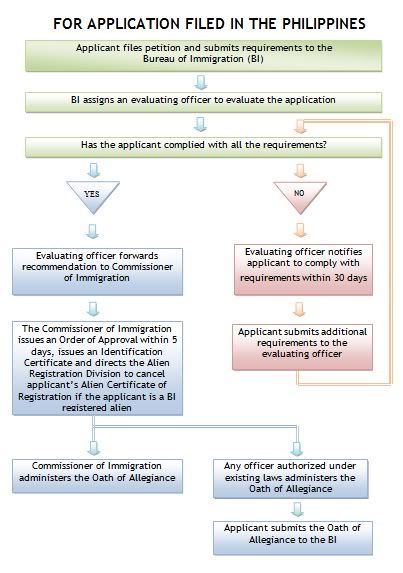
On August 29, 2003, the government of the Philippines passed Republic Act No. 9225 also known as the Citizenship Retention and Re-acquisition Act of 2003. This law allows natural-born Filipinos the opportunity to retain or re-aquire their Filipino citizenship in addition to the citizenship of their resident country. Essentially, dual citizenship already existed due to operation of nationality laws. For instance, a child born in the United States to Filipino parents is considered an American citizen according to jus soli, place of birth, and a Philippine citizen by jus sanguinis, citizenship of parents. However, citizenship in the past has been lost due to naturalization in another country.

After the passage of R.A. 9225, citizenship is no longer lost upon naturalization as the natural-born Filipino retain citizenship. In addition, natural-born Filipinos can re-acquire their lost citizenship through an application process. Residency is not a requirement for application as there are methods of applying while overseas in addition to within the Philippines.

Implications for Filipino-Americans
If a Filipino-American qualifies as a natural-born Filipino, they can apply to dual citizenship and regain full civil, economic, and political rights under existing laws of the Philippines. This includes but is not limited to the right to own property in the Philippines, right to acquire a Philippine passport, and right to vote in elections. Other citizenship duties such as income tax are only applied to income earned from the Philippines. A professional can also apply for licenses or permits to engage in their legal practice.

By having dual citizenship, Filipino-Americans are gaining a number of advantages. For instance, some Filipino-Americans wish to stay in the Philippines for extended periods of time. However, extending tourist visas can become extremely expensive and restrict the period of time a person can stay in the Philippines. By becoming a citizen, a person can automatically be allowed to stay for a year. This act also allows many to retire to the Philippines after spending a majority of their adult life in the United States. There are limitations of how much land a foreigner can purchase or invest in and citizenship removes these. There are also those that wish to become “Filipino” again and this allows them to do so. In a sense, it allows them to finally return home.

Requirements for applying for retention or re-acquisition of Filipino citizenship
As according to the Commission on Filipinos Overseas
Duly completed verified petition
Notarized Oath of Allegiance
    "I, ________________, solemnly swear that I will support and defend the Constitution of the Republic of the Philippines and obey the laws and local orders promulgated by the duly constituted authorities of the Philippines, and I hereby declare that I recognise and accept the supreme authority of the Philippines and will maintain true faith and allegiance thereto, and that I impose this obligation upon myself voluntarily without mental reservation or purpose of evasion."
Two (2) recent 2”x2” colored photographs of applicant
Application Fee (US$50 for overseas applicants or PhP 2,500 for Philippine based applicants)
Proof as natural born Filipino citizen, an original or photocopy of at least one of the following:
    a. Philippine birth certificate
    b. old Philippine passport
    c. voter’s affidavit or voter’s identification card
    d. marriage contract
    e. other documents proving that the applicant is a former natural born Filipino citizen
photocopy of foreign passport
photocopy of certificate of naturalization or an original affidavit stating how foreign citizenship was acquired
two self-addressed and stamped legal size envelopes

Summary of process


Sites to visit
www.ecensus.com.ph - Birth certificates can be requested through the NSO website
www.immigration.gov.ph - R.A. 9226 Form No. 1 can be downloaded from here
www.dfa.gov.ph - contact information and addresses for Philippine Embassies and Consulates where applications can be filed

Monday, May 21, 2001

EDSA 3


EDSA 3 was a protest sparked by the arrest in April 2001 of newly deposed Erap. The event still took place in EDSA. 4 months after EDSA 2, the protests were asserted as a more populist and representative uprising compared to the previous demonstrations. The protests and the attack of the presidential palace failed in their objectives. Participants continue to claim that it was a genuine People Power event, a claim disputed by the participants and supporters of Edsa 2. President GMA has acknowledged the diversive nature of the two terminologies by saying in one statement that she hoped to be the president of the Edsa 2 and Edsa 3.


The crowd of an alleged several thousand Filipino people , most of whom were urban poor and devotees of Iglesia in Cristo, gathered at the Edsa Shrine. News organizations aiming to cover the rally were advised to to approach EDSa as there were reports of stones being thrown at cameramen, especially those from ABS-CBN. This protest, however, was led by members of the political opposition of the time: Enrile, Defensor-Santiago, and Sotto III.

The rebellion aimed to remove GMA from presidency and to reinstate Estrada. It was in May 1, 2001, when the rebellion came to a head on the morning of that day. Hundreds of thousands of protesters stormed towards Malacanang Palace. Several broadcast vans of media personnel were attacked by the crowd, the dispersed marchers, causing violence causing the police and military personnel to implement maximum tolerance policy.

Hours after the crowds of Edsa2 were dispersed, representatives of the Archdiocese of Manila and Civil Society supporters of the Arroyo administration reclaimed the Edsa Shrine where there had been alleged acts of vandalism and garbage all over the vicinity. Since the protest was carried out mostly by the lower income, uneducated masses, widespread destruction and vandalism of public utilities and public store fronts along the protest routes at Recto Avenue.


Critics of Edsa 3 argue that while this was major protest, the spirit of it was unlike the first and second protests. Supporters of Edsa 3 journalism allege that Edsa 1 and 2’s participants were made up of the middle and upper classes and thus, not democratically-representative unlike the participants of Edsa 3. Other arguments also point to the success of the first two to remove the presidents targeted, as opposed to the Edsa 3’s failed event.

-CA

Monday, May 14, 2001

EDSA DOS


EDSA DOS, also known as the Edsa Revolution of 2001, is the common name of the four day popular revolution that peacefully overthrew the then President, Joseph “ERAP” Estrada, which took place in January 17-20 2001.

It was in October 2000 when Chavit Singson, Ilocos Sur Governor, went public with accusations that Estrada and his friends and cronies received millions of pesos from operations of the illegal numbers game called jueteng. And this prompted rage from the public.

The next day, Senate Minority Leader Teofisto Guingona Jr. delivered a fiery privilege speech accusing Estrada of receiving P220M in jueteng money from Singson from November 1998-August 2000, besides taking P70M on excise tax on cigarettes for Ilocos Sur. The privilege speech was referred by Senate President Franklin Drilon, to the Blue Ribbon Committee and the Committee on Justice for joint investigation. Another committee in the House of Representatives decided to investigate the expose, while other house members spearheaded a move to impeach the president.


On January 17, 2001, the impeachment trial of President Estrada moved to the investigation of an envelope with an evidence that would prove acts of political corruption by Estrada. Senators allied with Estrada voted to block the evidence and after the vote took place, with not opening the envelope favored, Aquilino Pimentel resigned as Senate President and walked out, followed by the 9 opposition senators.

The walk out and the voting outcome prompted the Philippine National Police and the Armed Forces of the Philippines to withdraw support for Estrada, joining the crowds at the Edsa Shrine 2 days later. At 2 pm that day, Estrada appeared on television the first time stating that he will not resign, rather, he wants the impeachment trial to continue, stressing that only a guilty verdict will prompt him to resign from his office.


Shortly after, Erap called for a snap presidential election to be held with congressional and local election on May 14, 2001. GMA then takes her oath of office in the presence of the crowd at EDSA, becoming the 14th woman president of the Philippines. At 2pm , Erap released a letter saying he had strong and serious doubts of the legality of her presidency, but said he would give up his office to avoid being an obstacle to healing the nation. Later, Erap finally conceded and his family leave Malacanang Palace, and was placed on house arrest.

-CA